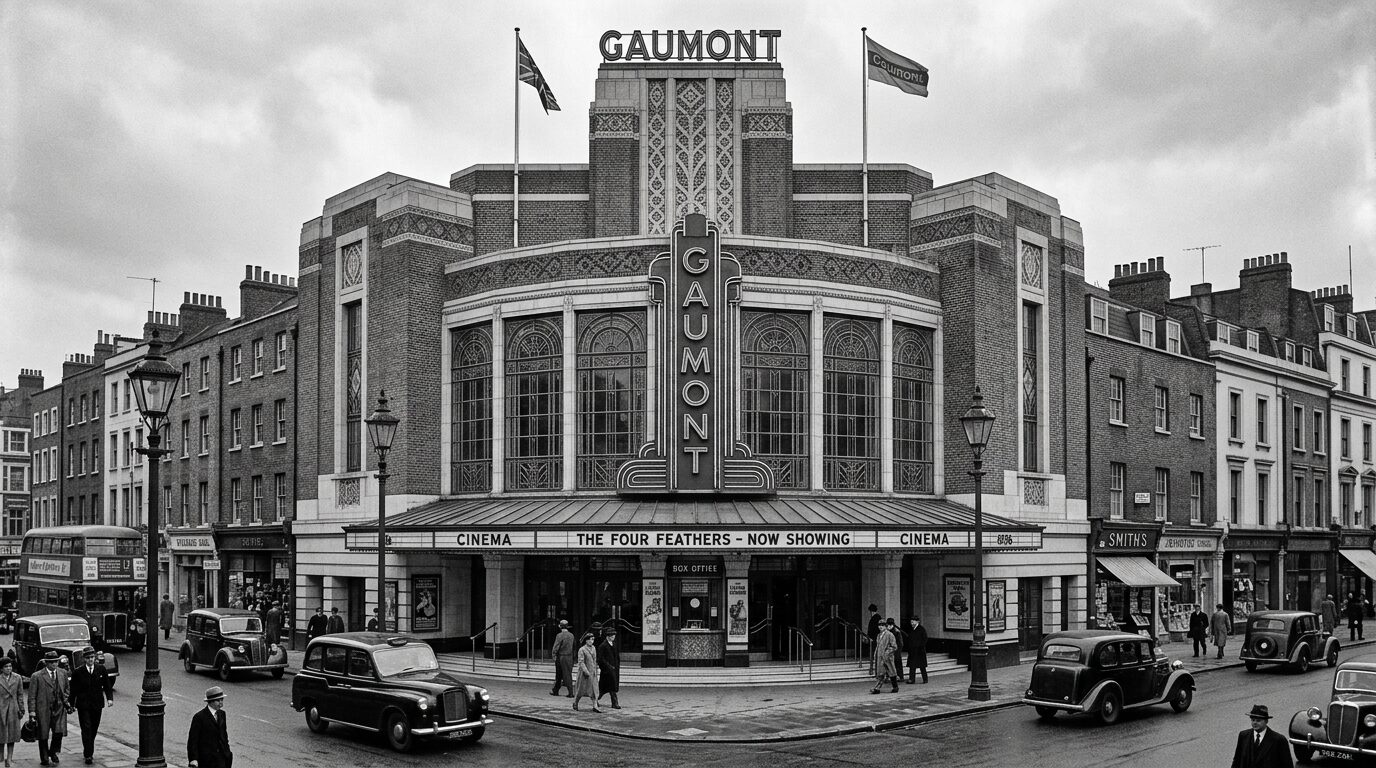
For decades along the bustling stretch of London Road in Norbury, two neighbouring picture houses stood as monuments to the golden age of cinema: the grand Rex Cinema and its earlier counterpart, the Norbury Cinema. During an era before home television transformed evening leisure, these picture houses drew thousands of SW16 residents each week to marvel at Hollywood musicals, British dramas, and weekly newsreels.
While both buildings have long since vanished from the high street landscape, their intertwined histories illuminate how rapid suburban growth, competitive architecture, and changing entertainment habits reshaped Norbury across the twentieth century.
The Early Days: Norbury Public Hall and the Palais de Luxe
Norbury’s cinematic story began well before the purpose-built movie palaces of the 1930s. In 1906, the Norbury Public Hall (also known as King Edward Hall) opened at 1355 London Road. Originally conceived as a civic assembly space, by 1909 it had adapted to the craze for moving pictures, screening silent shorts to audiences of up to 700 people.
By March 1910, the venue was formally relaunched as the Palais de Luxe, bringing an air of Edwardian glamour to the southern suburban fringe. In 1920, following the First World War, the venue was refurbished and renamed the Norbury Cinema, expanding its seating capacity to 859. For nearly two decades, it served as the neighbourhood's principal local cinema, screening the transition from silent film into the talkie revolution of the late 1920s and early 1930s.
1937: The Arrival of ABC's Art Deco Rex Cinema
The suburban boom of the 1930s brought intense commercial interest to Norbury. In January 1937, Associated British Cinemas (ABC)—one of Britain's dominant cinema circuits—unveiled the monumental Rex Cinema at 1298 London Road, directly opposite the older hall.
Designed by architect Douglas Harrington in the sleek Art Deco style of the period, the Rex was a true suburban super-cinema. Its exterior featured clean red-brick massing accented by five towering windows above the main entrance canopy, allowing daylight to flood the circle foyer. Inside, the auditorium accommodated 1,504 patrons—960 in the stalls and 544 in the raked circle—offering modern acoustic engineering, plush seating, and state-of-the-art projection.
The Rex opened its doors on 4 January 1937 with a crowd-pleasing double bill featuring Fred Astaire and Ginger Rogers in RKO's classic musical Swing Time, alongside Jack Haley in Mr. Cinderella. The arrival of such a modern rival proved overwhelming for the older Norbury Cinema across the street, which closed its doors just months later in 1937.
From Silver Screen to Supermarkets and Flats
The Rex enjoyed a quarter-century reign as Norbury’s cultural showpiece. However, the rise of domestic television ownership and changing leisure habits in the late 1950s led to declining admissions across Britain's suburban cinema circuits. The Rex screened its final films on 17 February 1962, showing Leslie Caron in Fanny alongside Highroad to Scotland.
Following its closure, the Rex followed a trajectory shared by many mid-century picture houses: it operated for several years as a popular community bingo club before being demolished. In its place rose an office block named Radnor House, which was subsequently converted into residential flats in 2006.
Across the road, the former Norbury Cinema at 1355 London Road also survived through several commercial lives—operating as a wartime British Restaurant, an industrial paint warehouse, and later a Gateway supermarket and furniture store—before the historic structure was finally demolished in 2022 to make way for new retail and housing.
Heritage Timeline for Norbury Local Historians
- 1906: Norbury Public Hall (King Edward Hall) opens at 1355 London Road; screens films from 1909.
- 1910–1920: Operates as the Palais de Luxe, later renamed Norbury Cinema with 859 seats.
- 4 January 1937: ABC opens the 1,504-seat Art Deco Rex Cinema at 1298 London Road with Swing Time.
- 1937: The older Norbury Cinema closes due to competition from the Rex.
- 17 February 1962: The Rex Cinema closes its doors, subsequently becoming an Alpha Bingo Club before demolition.
- Present Day: The Rex site is occupied by Radnor House apartments (1298 London Road), while 1355 London Road hosts modern redevelopment.